
The discussion around browser-based data leakage highlights a challenge that many organizations are now facing: sensitive data does not leave only through files, email attachments, or cloud storage. It can also leave through everyday browser actions such as copy-paste, web form submissions, AI prompts, SaaS uploads, and personal account usage.
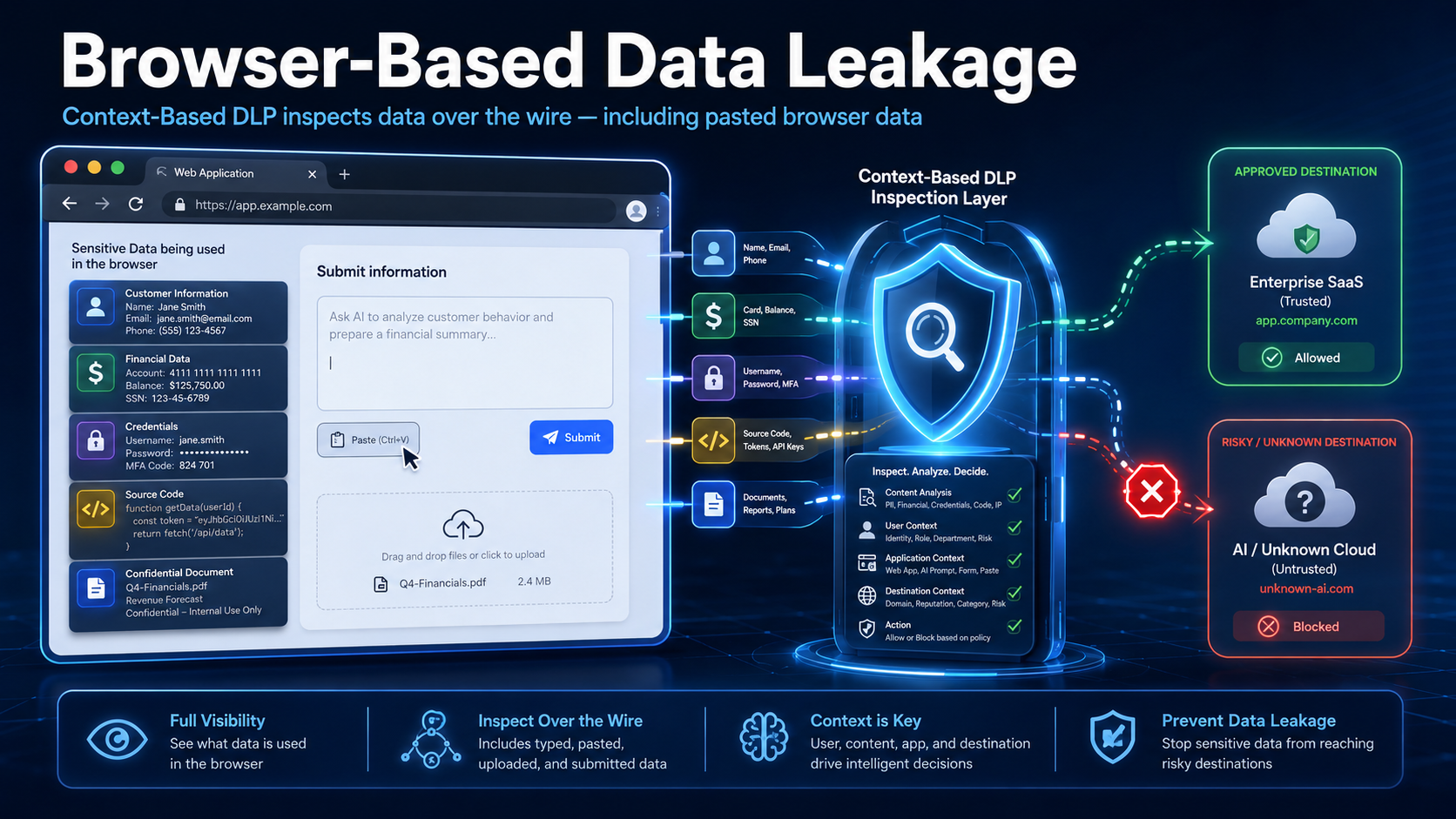
As the article correctly points out, modern work has shifted heavily into the browser. Users may copy customer records, credentials, financial information, source code, or other sensitive data from internal applications and paste it into personal email, SaaS tools, or AI platforms. In many cases, this activity can look like normal web usage unless the security system understands the context of the data and destination.
At GajShield, our Context-Based DLP approach has been designed around this exact challenge. Instead of looking only at file movement, GajShield can inspect data flowing over the wire, including sensitive content submitted through browsers, web forms, uploads, and pasted data, to identify possible data leakage attempts based on content, category, user, application, destination, and policy context.
This is where context becomes critical. The same data may be acceptable when sent to an approved business application, but risky when posted to a personal account, unknown SaaS service, public AI tool, or unapproved destination. GajShield’s Contextual Intelligence Engine helps organizations identify such risks and enforce policies before sensitive information leaves the network.
The larger lesson is simple: DLP cannot remain limited to traditional file-based controls. Browser activity has become one of the most important data movement channels in the enterprise, because apparently the humble browser has now become the new USB drive with better branding. Organizations need visibility into what data is moving, where it is going, who is sending it, and whether the action is allowed.
Your security controls aren't failing, they're missing where most of today's work actually happens. Keep Aware shows how browser activity like copy/paste and AI prompts bypass traditional protections. [...]
Source: The Browser Is Breaking Your DLP: How Data Slips Past Modern Controls via Bleeping Computer — published 07 May 2026.
Was this article helpful?
Your feedback helps us improve the knowledge base.