
The Department of Information and Communications Technology’s investigation into a possible breach of the Environmental Management Bureau’s Company Registration System (CRS) is particularly significant for organizations operating in Manila and across the Philippines, because the affected platform is not simply another public-facing government website. The CRS is used as a central registration system for companies interacting with the EMB and contains official corporate records, ownership information, registration details, and other sensitive filings. If unauthorized access is confirmed, the incident could expose information useful not only for privacy abuse, but also for corporate impersonation, targeted phishing, fraud, and follow-on attacks against Philippine businesses.
At this stage, however, the most important fact is that the breach remains unconfirmed. DICT says authorities were alerted to the alleged incident and investigators are still determining whether the exposed information is authentic, whether it genuinely originated from the EMB CRS, how access may have occurred, and how much information may have been affected. That distinction should remain central to any reporting because leaked datasets can sometimes contain old, aggregated, duplicated, or falsely attributed information. Until forensic verification is complete, the responsible description is a possible breach under investigation, not a confirmed compromise.
The potential impact is nevertheless significant because the CRS is closely connected to other EMB online regulatory processes used by businesses in Metro Manila and throughout the country. Companies dealing with environmental permits, compliance monitoring, hazardous-waste registration, and other regulatory requirements may interact with EMB systems that rely on company registration data. This makes the CRS an important identity and business-reference layer across multiple environmental compliance processes, increasing the value of the information stored within it.
If company ownership details, contact information, registration records, or regulatory filings were obtained, attackers could use that information to construct highly convincing business-email-compromise and spear-phishing campaigns targeting companies in Manila and other major Philippine business centers. A criminal who knows the real company name, officers, regulatory relationships, permit activity, and government systems being used can create far more believable messages than generic phishing. Instead of sending an obvious fake invoice, the attacker could impersonate EMB or DENR personnel and reference an actual company registration or compliance process.
That secondary risk is often underestimated in breach response. The direct exposure of a document may be damaging, but structured government records can give attackers the context required to make future attacks appear legitimate. Corporate registration details can be combined with information from company websites, procurement databases, social media, and previous breaches to create targeted fraud or credential-theft campaigns against finance, administration, compliance, and management teams in Manila-based organizations.
The same concern applies to personal information that may be embedded in corporate filings. DICT says preliminary reporting suggests both personal and corporate data could be involved. Depending on the actual fields stored in the CRS, that could potentially include names, contact details, company representatives, directors, or other individuals associated with regulated businesses. The exact data categories have not yet been publicly confirmed, so it would be premature to claim exposure of specific personal identifiers until DICT or EMB publishes verified findings.
The incident also raises an important question about system interconnectedness within Philippine government digital services. Registration systems are rarely isolated. They may share credentials, company identifiers, APIs, or trust relationships with permitting, monitoring, or compliance platforms. Investigators should therefore determine whether the CRS shares credentials, tokens, administrative accounts, or backend integrations with other EMB and DENR systems used by businesses in Metro Manila and the rest of the Philippines.
If attackers gained database access through a compromised web application, investigators will need to determine whether the access stopped at data extraction or progressed into the application or server environment. Those are very different incidents. A leaked database may require notification and credential review, while remote control of the underlying server could require a much broader incident response involving system rebuilds, service-account rotation, lateral-movement analysis, and review of connected infrastructure.
The initial response should therefore focus on preserving evidence before making unnecessary changes. Web-server logs, application logs, database audit trails, administrative authentication records, endpoint telemetry, firewall logs, cloud logs, and remote-access records should be retained for the relevant period. Investigators should determine when suspicious access first occurred, which accounts or systems were involved, what queries were executed, whether bulk exports took place, and whether files or database contents were modified in addition to being read.
Database activity will be particularly important. Large or unusual queries, bulk table exports, access from unfamiliar application hosts, use of privileged database accounts at unexpected times, or queries covering ownership and registration data at abnormal scale could help establish whether information was actually exfiltrated. Merely finding a copy of purported CRS data online does not prove how it was obtained.
The investigation should also distinguish between confidentiality compromise and integrity compromise. Much of the initial concern is naturally focused on information exposure, but an attacker capable of modifying registration records could create a different and potentially more serious problem. Changes to company ownership, registration status, permit references, or associated records could interfere with regulatory processes or support fraud. DICT and EMB should therefore validate not only whether information was copied, but whether any records were altered.
Businesses in Manila whose records may reside in the CRS should also prepare for phishing that references EMB or DENR processes. Any company using these systems should be cautious about messages asking it to “verify” company details, reset passwords, upload documents, pay fees, or review alleged compliance problems through links sent by email or messaging platforms. If attackers genuinely obtained CRS records, those lures could contain correct company-specific information, making them much harder for employees to identify as fraudulent.
Password security should also be reviewed if the CRS stores local account credentials. There is currently no public evidence that passwords or password hashes were exposed, so organizations should not assume this occurred. However, if DICT later confirms credential-table access, users who reused their CRS password elsewhere would face additional risk. Password reuse could turn one Philippine government-system breach into access to corporate email, cloud services, or other unrelated accounts.
The architecture of the CRS also deserves examination. Government registration portals often begin as relatively narrow applications but gradually become identity layers for multiple services. As that dependency grows, the security architecture needs to evolve accordingly. Strong multi-factor authentication, privileged-access controls, segmentation, database encryption, centralized logging, security monitoring, and regular penetration testing should be considered fundamental for systems storing nationwide corporate records.
The timing is also noteworthy because DICT has been investigating other potential data-exposure incidents involving Philippine organizations. These should not automatically be treated as related unless evidence shows a connection, but multiple investigations in a short period reinforce the need for strong monitoring around government repositories that hold sensitive corporate and cybersecurity information.
For Manila-based companies, the most practical response for now is heightened vigilance rather than panic. Staff responsible for environmental compliance, permits, finance, administration, and corporate registration should be warned about possible targeted phishing. Any unexpected request supposedly from EMB or DENR should be verified through an independently obtained government contact rather than through links or phone numbers contained in the message.
The broader cybersecurity lesson is that government databases containing corporate information have value far beyond the information they store directly. They also contain trusted relationships and operational context. A threat actor who knows which Manila companies interact with which government agencies, which representatives are listed, and which regulatory processes are underway gains material that can be weaponized for social engineering.
That makes systems such as the EMB CRS attractive targets even when they do not contain financial data.
The practical incident-response questions are therefore broader than simply asking whether information was leaked. Investigators need to determine whether the data is authentic, how access was obtained, what information was viewed or exported, whether anything was modified, whether credentials or administrative systems were compromised, whether connected EMB systems could also be affected, and which businesses in Manila and across the Philippines may now face secondary phishing or impersonation risks.
Until DICT completes that work, the breach should remain described as alleged or possible. But if the exposure is confirmed, it should be treated as more than a routine privacy incident. A centralized repository of Philippine corporate identities and filings can become intelligence for future attacks.
The immediate damage may be data exposure. The longer-term risk is attackers using trusted government-held information to make their next attack against Manila businesses look legitimate.
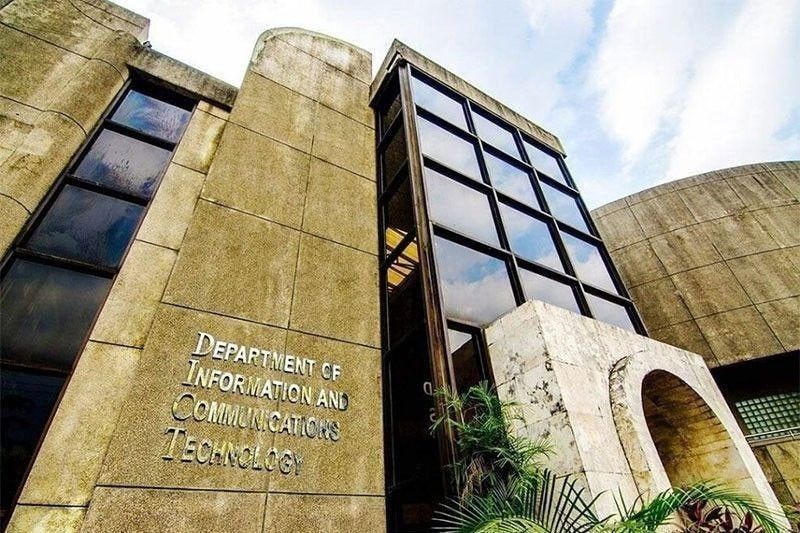
The Department of Information and Communications Technology (DICT) is looking into an alleged unauthorized access incident involving the Company Registration System (CRS) of the Environmental Management Bureau (EMB), an attached agency of the Department of Environment and Natural Resources.
Source: DICT probing possible EMB data breach via philstar.com.
Was this article helpful?
Your feedback helps us improve the knowledge base.