
The cyberattack targeting more than 30 Minnesota community water systems highlights why cybersecurity in public utilities must be treated as public-safety infrastructure, not just an IT concern.
Minnesota officials reported that a coordinated cyberattack targeted technology at more than 30 community water systems over a two-day period. The affected communities included places such as Plymouth, South St. Paul, Maple Plain, and Braham, with state authorities, federal partners, and private-sector teams working together on response and investigation.
The most important reassurance is that officials said there was no known threat to drinking water safety, and residents were not asked to change their water use. That matters because public communication during water-sector incidents must be calm, specific, and factual. Panic helps nobody, except scammers and cable-news graphics departments.
At the same time, the incident should not be dismissed simply because water quality was not affected. A cyberattack on water-system technology is serious even when the physical process continues safely. Water utilities depend on control systems, monitoring tools, sensors, pumps, lift stations, treatment systems, communication links, remote-access platforms, alarms, and operator workstations. If those systems are disrupted, the impact can quickly become operational.
In Braham, reports said the water plant was briefly knocked offline after operating controls were affected, though officials said crews quickly restored operations and water quality was not impacted. That is exactly the kind of event that shows the difference between a contained incident and a dangerous one. Good response can prevent a cyber event from becoming a public-health emergency.
Water infrastructure is uniquely sensitive because it supports daily life. People can tolerate many technology outages, but they cannot tolerate uncertainty around drinking water, sanitation, firefighting support, hospitals, schools, and essential municipal services. A water-system incident may begin in a computer, but the concern is always physical reliability.
The coordinated nature of the attack is also important. When multiple municipal water systems are targeted around the same time, defenders must think beyond one local technical problem. Shared vendors, common remote-access tools, similar control systems, reused credentials, exposed services, outdated firmware, and common configurations may all become part of the investigation.
Smaller municipalities are especially vulnerable. Many community water systems operate with limited cybersecurity budgets, small IT teams, old operational technology, vendor-managed equipment, and staff who are focused mainly on keeping services running. Attackers know this. They often target the places where the public consequence is high but security resources are thin. Charming species, attackers.
This incident also shows why cyber response for critical infrastructure must be coordinated. Local utilities may not have enough visibility or resources by themselves. State cybersecurity teams, public-health agencies, federal partners, law enforcement, vendors, and private responders all need to share information quickly so that attacks can be contained before they spread.
For water utilities, the first lesson is asset visibility. Operators need to know exactly what systems support water operations: PLCs, SCADA systems, HMIs, engineering workstations, remote terminals, gateways, sensors, pumps, treatment controls, historian systems, backup systems, remote-access appliances, and vendor laptops. You cannot protect what you cannot find, though organizations keep trying, presumably for tradition.
The second lesson is network segmentation. Water operational systems should not be easily reachable from ordinary office networks, public Wi-Fi, vendor networks, or the open internet. If a business email account or office workstation is compromised, attackers should not be able to move easily into the systems controlling pumps or treatment operations.
Remote access needs strict control. Many utilities rely on remote support from vendors, integrators, engineers, and city staff. That access should be protected with multifactor authentication, named accounts, limited privileges, approved access windows, VPN or zero-trust controls, session logging, and rapid revocation when no longer needed.
Default passwords and shared accounts must be eliminated. Water-sector devices and control interfaces often remain in service for many years. If default or shared credentials remain active, attackers can move faster than defenders. Every operator, vendor, and administrator should use unique credentials tied to identity and role.
Patch management must be risk-based. Industrial systems cannot always be patched instantly, because changes may affect operations. But “hard to patch” cannot mean “never patch.” Utilities should maintain a tested update process, vendor coordination, fallback plans, and compensating controls when patches are delayed.
Monitoring is critical. Water utilities should watch for unusual logins, configuration changes, remote sessions, unexpected commands, abnormal pump or lift-station behavior, strange PLC communication, new accounts, repeated authentication failures, suspicious outbound traffic, and changes to alarm or monitoring systems.
Operational anomaly detection matters too. Cybersecurity monitoring should not only ask whether a login looks suspicious. It should also ask whether the physical process looks normal. If a pump starts or stops unexpectedly, if a tank level changes strangely, if telemetry drops, or if an operator display shows inconsistent data, that may require cyber review as well as engineering review.
Manual fallback procedures remain essential. In critical infrastructure, cyber resilience means being able to operate safely even when digital systems are unavailable or untrusted. Utilities should test manual operations, backup communications, offline procedures, spare equipment, and emergency staffing plans.
Backups must be protected and tested. SCADA configurations, PLC logic, HMI projects, historian data, network-device configs, server images, and operational documentation should be backed up securely. Backups should not be reachable from the same systems attackers may compromise. A backup that ransomware can encrypt is just a delayed failure with nicer labeling.
Incident communication must be prepared before an attack. Residents need clear answers: Is the water safe? Can they use it normally? Are billing or customer systems affected? What should they watch for? Which official channels should they trust? Silence creates rumor, and rumor spreads faster than any advisory, because humans are apparently peer-to-peer misinformation networks.
Utilities should also warn residents about follow-on scams. After public cyber incidents, criminals may impersonate city staff, water departments, billing offices, inspection teams, or emergency-response officials. They may ask for payments, credentials, account verification, or access to homes. Residents should verify all communication through official city channels.
For state and federal agencies, this incident reinforces the need to support small and medium utilities. Cybersecurity expectations must be matched with funding, training, shared services, threat intelligence, incident response support, and practical technical guidance. Telling under-resourced utilities to “be more secure” is not a strategy. It is a slogan wearing a badge.
For vendors and system integrators, the lesson is accountability. Remote-management platforms, control-system configurations, VPN appliances, gateways, telemetry tools, and maintenance practices must be secure by design. A weak vendor access path can expose many municipal customers at once.
For organizations outside the water sector, the lesson still applies. Any operational environment that connects physical processes to digital systems needs segmentation, monitoring, access control, resilience planning, and tested response. Water, energy, transport, manufacturing, healthcare, and building systems all share the same uncomfortable truth: cyber incidents can affect real-world services.
The key lesson is that critical infrastructure cybersecurity is not only about preventing data theft. It is about preserving safe, reliable operations.
Minnesota’s response appears to have helped contain the incident and prevent more serious public impact. That is good. But the fact that more than 30 water systems were targeted should push every utility to review exposure, remote access, segmentation, credentials, monitoring, backup readiness, and incident-response coordination.
Water systems are too important to depend on hope, old passwords, exposed control panels, and undocumented vendor access. The public expects clean water to keep flowing. Cybersecurity is now part of making that happen.
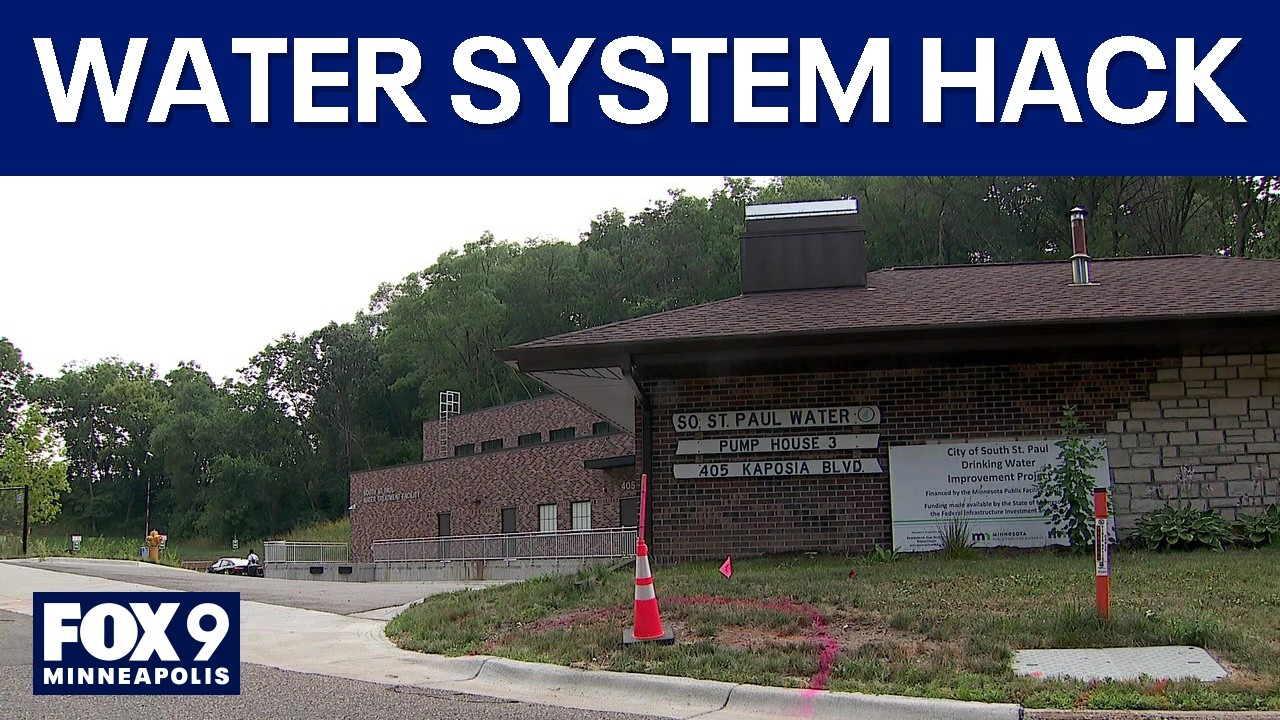
Minnesota authorities are investigating a widespread cyberattack involving more than 30 water systems throughout two days. FOX 9’s Mike Manzoni has the latest details.
Source: Minnesota water systems cyberattack explained via fox9.com.
Was this article helpful?
Your feedback helps us improve the knowledge base.